

Interview with Lanette Kristel Dela Cruz: The power of pro-culturation and migrant success

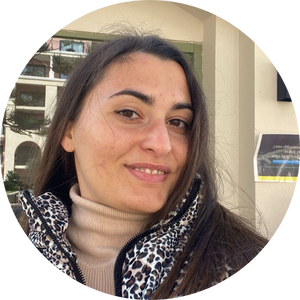
Federica Pettinato and Lanette Kristel Dela Cruz (1) met to discuss Lanette’s research on migrant thriving. In this interview, Lanette shares her personal journey from the Philippines to Malta, the challenges of having her qualifications recognised, and her research study that shifts the perspective from exploring migrant vulnerability to migrant flourishing.
Hello Lanette, thank you for sharing your research experience with us. I’ve read a bit about your background, and I was struck by how much I relate to your story, particularly the experience of being separated from a parent at a young age.
In that sense, we share a similar experience, even if in very different contexts. While your separation involved a much greater geographical distance, I went through something comparable around the same age, when both of my parents moved from Sicily to Malta for work, and we were apart for several months despite being much closer geographically.
Would you like to start the session by introducing yourself?

Thank you, Federica. Absolutely! So, from a young age, I’ve always wanted to do good in school, not because I wanted to achieve something, but because I felt that being active in school allowed me to have a sense of belongingness. As you mentioned, we have, somewhat, the same experience when it comes to being separated from our parents. So, I just tried to find some kind of family in that environment. I chose to study psychology in the Philippines upon realizing that I wanted to be in a helping profession. Having a kind of turbulent phase growing up, I thought becoming a psychologist would definitely help me understand myself and eventually help other people who are going through the same. Then I fell in love with psychology! I was amazed by how the brain works and it just made me more curious and eager to explore human complexities. So, after four years, I got my Bachelor’s ’s degree then moved to Malta to work and save money.
I moved to Malta when I was 22. I came here to be reunited with my mom and to earn a living. I still hadn’t given up on my dream to become a psychologist yet but I knew it would take a while to save a big amount of money so I could get into a master’s program part-time. However, I found my first job here really difficult. Plus, I didn’t expect that being away from my family, friends, and everything I was familiar with was going to be that hard. I worked as a live-in carer as my first actual job after graduating. But I told myself: ‘This is still related to psychology. I am still in a helping profession. That’s what matters.’
But the difficulty of the job and isolation really got into me that I was even thinking about going back to the Philippines. So, I decided to apply for the part-time master’s program right away, thinking that it would somehow alleviate the loneliness and give me more motivation. But I got refused because a Bachelor’s degree in the Philippines could not be considered comparable to the Bachelor’s degree here. That was a heart-breaking moment. It felt like all my sacrifices went in vain. I was then advised to do the Bachelor’s degree here. I didn’t consider that an option at first because I didn’t want to redo the course I did before. And most importantly, I didn’t have the money! But the job just got more and more difficult that I decided to actually do the Bachelor’s degree here.
Looking back, it was not a rational choice at all because I didn’t have the money. But it was a faith-informed decision. I prayed for it and God took care of everything for me. Eight years after that, I am now working at the University and finally getting my master’s degree this March. What’s amazing is that I didn’t have to pay the tuition fees for both studies. Looking back at it now, I realised how important it is for us to fight and stick to our dreams and purpose in life.
Thank you so much for sharing your experience. What motivated your focus on the concept of “thriving” among migrants, particularly as a departure from the conventional discourse that predominantly emphasises vulnerability?
I think this was inspired by several things: First, because as you said, discourses and research studies were mainly focused on migrant vulnerability, which I think is still important because they inform policies, but I know that they do not only have vulnerabilities. In fact, I see them as strong, resilient, adaptable and resourceful individuals, reason why I wanted to explore these things further. Second, because I’ve only watched other migrants seem to be thriving in their own ways, so I’ve always wondered what they were doing differently and what other migrants and I could learn from them.
Lastly, I’ve always been interested in and inspired by positive psychology, a movement in psychology that became popular in the 2000s. It really shifted the focus of psychology from a field that mostly diagnoses and treats problems but one that focuses on strength and flourishing.
What challenges did you meet during this profound exploration of “the other,” how did you navigate situations where these obstacles seemed insurmountable, and what specific strategies did you employ to prioritise emotional and subjective narratives over empirical and objective data?
Since I’m a migrant as well, one of the main challenges I encountered during the conceptualisation and early stages of my research was reading a lot of hate on migrants on social media. I almost stopped my research that time. I think it was in the summer of 2024, a lot of electricity blackouts were happening, and people were blaming migrants. “It is because there are too many foreigners, too many migrants”. I’ve read so many times that we should go back to our country. Those messages demotivated me. It was disheartening. I thought, what’s the point of researching what helps migrants thrive if almost everyone hates migrants? Will anyone take this research seriously? Will all my efforts be wasted? At that time, I felt like I was the only one who wanted migrants to thrive. It felt like a battle against everyone. This really affected me.
I overcame that by talking to my supervisor and colleagues in the course. The constant supervision and peer debriefing helped a lot. They helped me bracket my own personal experiences to be able to approach this research better.
The last challenge, I think, was interpreting some of the results of my research, which I thought were unexpected, like cultural adaptability being a negative predictor. That one took a lot of time for me to process. I tried to do the statistical test again, just to make sure that everything was correct. But yes, that was the result that came up. Of course, I referred to different literature that supported it, but mainly, I think these results just can’t be explained alone by this study, and they must be explored further.
Given that “pro-culturation” (2) is essential for an individual to live in harmony with themselves and their environment, why do you believe this approach, which supports the self-actualization of those moving to foreign countries, is often neglected in favour of demands for total abnegation or cultural assimilation?
I think this new perspective (pro-culturation) gives us a more empathic and realistic way of approaching cultural adaptability. A lot of Maltese integration programs are based on assimilation-based programs, which can be seen as a unidirectional type of integration, in which migrants are just expected to conform to the local culture. I think it is still important to learn and respect the local culture, but we somehow need to consider having a bidirectional approach wherein two cultures interact and learn from each other. And because Malta’s population has now become widely diverse, migrants are exposed to different cultural realities, not only the Maltese culture anymore. So that should be considered as well. Our identities are somehow influenced by the people we are surrounded by, and from the things that we are constantly doing and having to deal with. So, I think proculturation has a more flexible approach to that. Migrants can have more flexibility when it comes to their cultural identity formation. Although it has not been formally adopted as an integration program strategy, as far as I know, I think it can be something that we can explore in the future.
In your view, what is the primary driving factor that leads to the alienation of “the other” within a society?
I want to look at it from two different perspectives. Maybe the others may isolate themselves because they feel they are not being welcomed, or they feel their presence is not appreciated, or they do not feel they belong, or they receive a lot of hate, and they prefer not to interact, and just stay within the comfort of a small group of people. Another, perhaps that there is fear that they would not feel respected or welcomed when they try to belong. I don’t think the locals are trying to seclude them in a very explicit way. I do not want to assume, as a lot of Maltese people are very welcoming and open, but maybe others are not, and that is why they feel isolated.
In an earlier interview with the Times of Malta, you mentioned that writing and painting serve as outlets for your creative exploration; are you currently planning to use these media to specifically address the theme of migrants thriving, or is your creative focus more general?
I have only thought about that briefly before, but no, I don’t have any projects yet where I can combine my creative side with my academic work. But if an opportunity comes, of course, I wouldn’t think twice. I would love that for sure!
I do feel like I have two sides in me, though. And two writing styles. One is more academic and the other is more personal and expressive. I value introspection a lot and I love writing about how I feel. I feel like writing is the best way for me to express myself. I like writing about ideas, life, relationships, and anything that makes us human.
When I was doing my master’s, I somewhat neglected that part of me. I stopped reading novels, poems, or anything philosophical for leisure because I had to focus on my dissertation. So, it was like two years that I had to neglect that side of me. So after finally submitting my research, I’ve been trying to come back to it. It was a bit more difficult and challenging than I expected it to be. And it’s quite frustrating, honestly. I thought maybe I’m just not capable of introspection and writing this way anymore. But I somehow feel it is coming back to me again. Slowly.
And when it comes to painting, I’m really not good at it, but I do it anyway because it’s therapeutic for me. I just paint or create crafts that I surround myself with so I feel more at home, this is my personal space. And somehow, the more I do it, the more integrated I feel in Malta. I feel like I’ve finally created a space for myself here.
Thank you so much for sharing, Lanette. This conversation has been very insightful and inspirational.
(1) Lanette moved to Malta nine years ago and has since worked across different fields. She currently works as an administrator at the University of Malta and as a Research Support Officer within the Department of Psychology. She has a strong interest in research, psychology, philosophy, music, and art. In her free time, she writes and paints. She uses these channels to navigate her experiences of migration and the complexities of cultural identity formation.
(2) Proculturation is a dynamic, agentic process through which individuals actively engage with, negotiate, and transform cultural resources across multiple sociocultural contexts, resulting in ongoing personal and cultural development rather than linear adaptation or assimilation (Gamsakhurdia, 2018).